
Proudly Serving Parts Of:
Grand Isle, Franklin & Chittenden Counties, VT
and Clinton County, NY

Hosting the Holidays on a Vermont Septic System
The holidays are when a Vermont home works the hardest. Relatives arrive, the oven runs for two days, the washing machine never stops, and everyone wants a long hot shower after coming in from the cold. If your house is on a septic system, all of that water ends up in the same tank and drainfield that handle a normal week. Add snow, frozen ground and a driveway full of guest cars, and winter hosting deserves a little forethought.
Here is how to host a full house without turning the holidays into a septic emergency.
Why a full house stresses a septic system
Your septic tank is designed around the number of bedrooms and the flow of a typical household. The EPA notes that indoor water use in a typical single-family home can be as much as 70 gallons per person, per day, and that all of it ends up in the septic system. Double the number of people in the house for several days and you roughly double that load.
The tank works by letting wastewater sit long enough for solids to settle and grease to float. When a large volume of water arrives too quickly, that separation does not have time to happen. Extension educators warn that water rushing into the tank can carry solids on into the drainfield, where they clog the soil that is supposed to treat the liquid. The drainfield is far more expensive to repair than a tank is to pump.
Spread out the laundry and the showers
Laundry is the biggest holiday trap. Guests bring towels, and everyone wants clean sheets. The EPA advises spreading washing machine use throughout the week, noting that doing all of the household laundry in one day can prevent the tank from having enough time to treat waste and could flood the drainfield. One university extension service suggests no more than two loads of laundry per day, one in the morning and one in the evening.
A few practical habits help:
- Wash towels and bedding in the days before guests arrive, not all on the day of the party.
- Run only full loads, and match the load size setting to the amount of laundry.
- Stagger showers across the morning and evening rather than having everyone clean up at once.
- Run the dishwasher only when it is full, and consider running it overnight rather than stacking it with other water use.
- Fix any running toilet before company arrives. The EPA says a single leaky or running toilet can add as much as 200 gallons of water per day.
Michigan State University Extension suggests reducing extra water inputs from laundry, dishwashers and extra showers for a few days before a large gathering, and doing water-intensive food prep ahead of time.
Protect the system from the kitchen
Holiday cooking produces fats, oils and food scraps in quantities you do not see the rest of the year. The EPA says never to pour grease down the drain, and lists cooking grease and oil, coffee grounds, paper towels and non-flushable wipes among the things that do not belong in a septic system. Fats can solidify in the pipes, build up the scum layer in the tank, and eventually seal the drainfield soil.
- Let roasting pan drippings cool and solidify, then scrape them into the trash.
- Wipe greasy pans with a paper towel before washing and put the towel in the trash.
- Limit use of the garbage disposal. The EPA notes that food waste adds solid material to the tank and that using a disposal means the tank will need to be pumped more often.
- Put a small wastebasket in the guest bathroom and let visitors know that only human waste and toilet paper should be flushed.
Think about winter: snow, cars and frozen ground
Vermont's cold adds a layer that southern septic advice does not cover. Snow over a septic tank and drainfield works as insulation. According to the University of Minnesota Onsite Sewage Treatment Program, a lack of snow cover lets frost go deeper into the ground, and compacted snow does not insulate as well as loose snow. Driving over the system compacts the snow and pushes the frost down deeper.
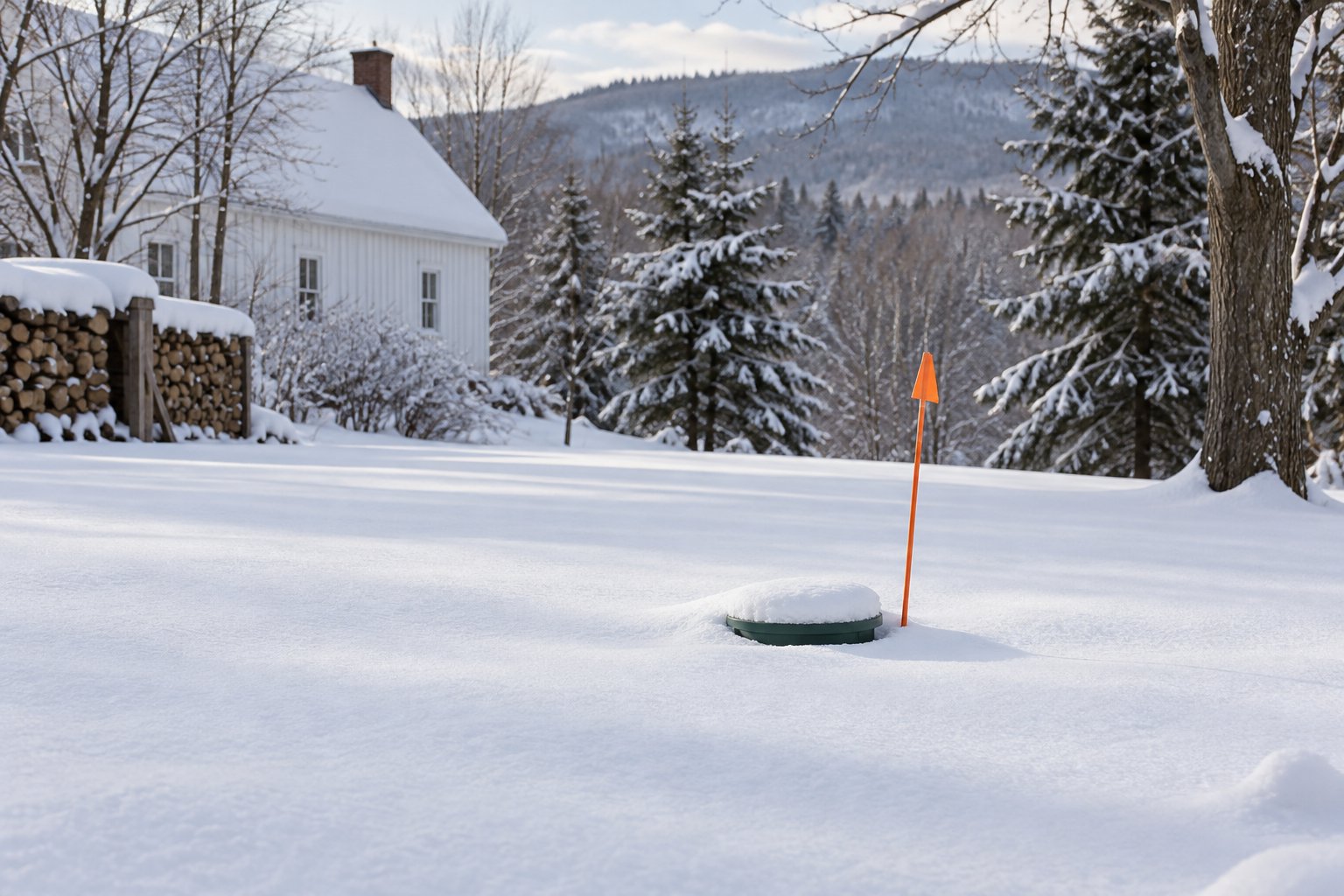
That is a big deal when ten people come for dinner and park wherever there is room. The EPA says not to park or drive on your drainfield at any time of year. Before the holidays, decide where guests will park, and keep cars, snowmobiles and ATVs off the tank, pipes and drainfield. Do not plow snow off the area or pile plowed snow on top of it either. If you have marked your tank lid and drainfield edges with stakes or flags, make sure they are still visible above the snow.
Our earlier article on frozen septic lines covers freeze protection in more detail, and it is worth a read before your guests arrive.
Plan ahead if a big gathering is coming
The EPA recommends that a septic tank generally be inspected every 1 to 3 years and pumped every 3 to 5 years, with the right schedule depending on tank size, household size, water use habits and how many solids have built up. If it has been a long time since your last inspection or pumping, the fall is a good time to deal with it, well before the holidays. A pump-out in the middle of a snowstorm, or the week of a family gathering, is the worst time to learn that your tank is full.
If you are hosting an unusually large event, a rental portable restroom can take pressure off both your plumbing and your septic system. Michigan State University Extension suggests this for large parties. We offer portable toilet rentals, including standard and handicap units and flush units with a sink. If you want to know what is available, contact us ahead of time rather than the week of the event.
Know the warning signs
If your system is overloaded, the EPA lists these common signs of trouble:
- Sewage or water backing up into toilets, drains or sinks
- Tubs, showers and sinks draining very slowly
- Gurgling sounds in the plumbing
- Standing water or damp spots over the tank or drainfield
- Sewage odors around the tank or drainfield
If you notice any of these, cut back on water use right away, which means holding off on laundry and long showers, and call a septic professional.
Frequently Asked Questions
How many guests can a septic system handle?
It depends on the size of the tank, the number of bedrooms the system was designed for, and the condition of the drainfield. A few extra people for a weekend is usually manageable if you spread out water use. A large gathering for several days is a bigger load, so plan ahead and check with a septic professional if you are unsure.
Is it okay to use the garbage disposal on holiday leftovers?
The EPA advises limiting use of a garbage disposal on a septic system, because food waste adds solids to the tank. Scrape plates into the trash or compost instead.
Should I pump my tank before the holidays?
If it has been several years or you are not sure when it was last done, an inspection and pump-out before a busy stretch is a good idea. The EPA suggests inspecting every 1 to 3 years and pumping every 3 to 5 years, depending on your household and tank.
Can guests park on my septic area in winter?
No. Vehicles compact the soil and the snow, which pushes frost deeper and is hard on the buried tank, pipes and drainfield. Set up parking elsewhere and keep the system area clear.
If you are hosting this season and want your system checked, or you are thinking about a portable restroom for a larger gathering, contact us through our contact page to request a quote. We serve homeowners across Grand Isle, Franklin and Chittenden Counties in Vermont and Clinton County in New York.


Hours:
Mon - Fri 9:00 am - 5:00 pm
Extended hours by appointment only.



All rights reserved | Privacy policy |
Disclaimer: Septic inspection credit is applied to septic installations only and must be redeemed within 7 days after a written quote provided upon state acceptance of design.
Disclaimer: Septic soil test credit is applied to septic installations only and must be redeemed within 7 days after a written quote provided upon state acceptance of design.