
Proudly Serving Parts Of:
Grand Isle, Franklin & Chittenden Counties, VT
and Clinton County, NY
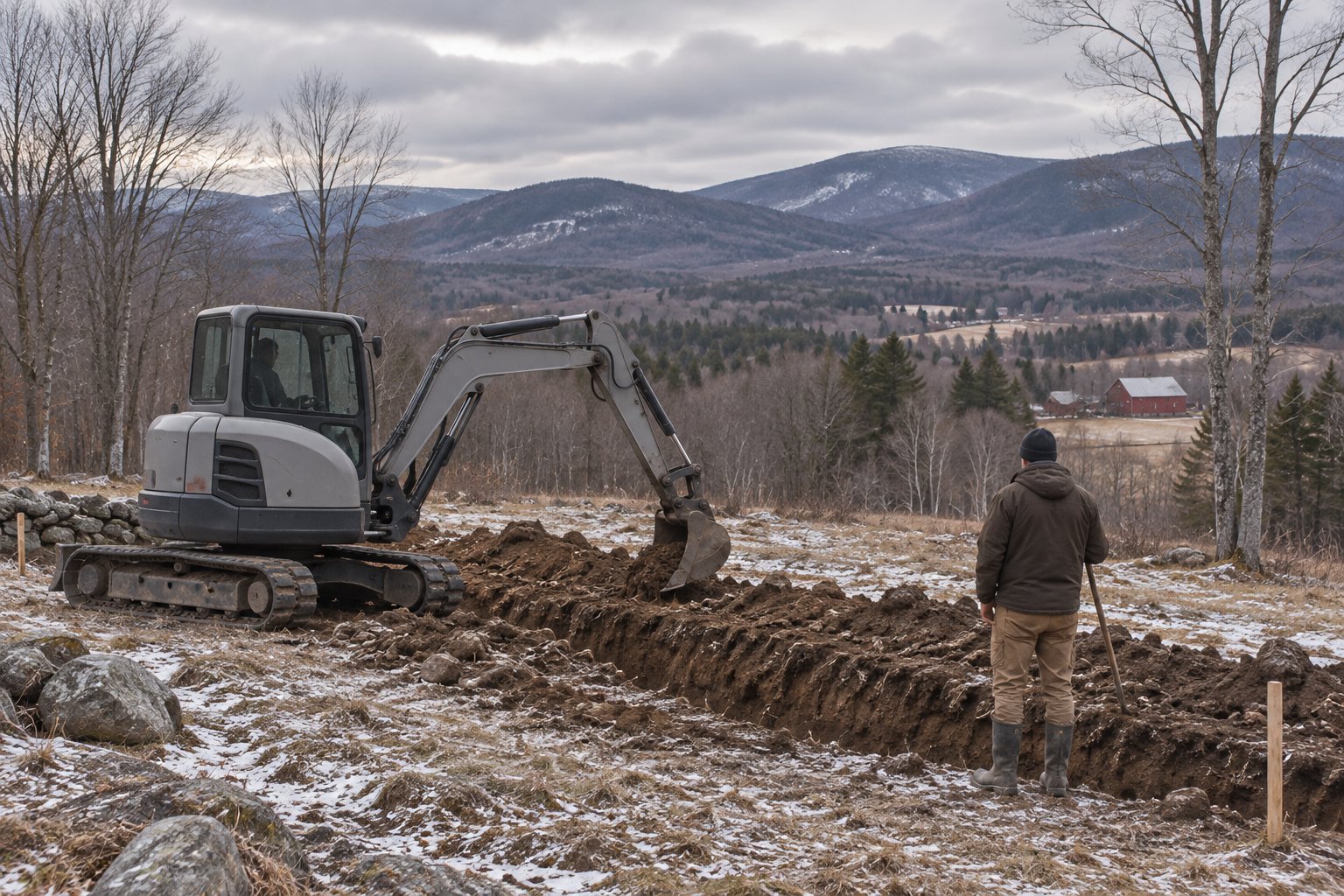
Winter Excavation in Vermont: What Work Continues After Freeze-Up
Most Vermonters assume that once the ground freezes, the excavators go to sleep until April. Reality is more nuanced. Frozen ground changes how dirt work gets done, which jobs make sense, and how much planning has to happen first, but it does not make every project impossible. If you own property in Grand Isle, Franklin or Chittenden County, here is a practical look at what winter does to excavation, what can keep moving, and how to use the cold months to set up a smoother spring.
What frozen ground actually does to a dig
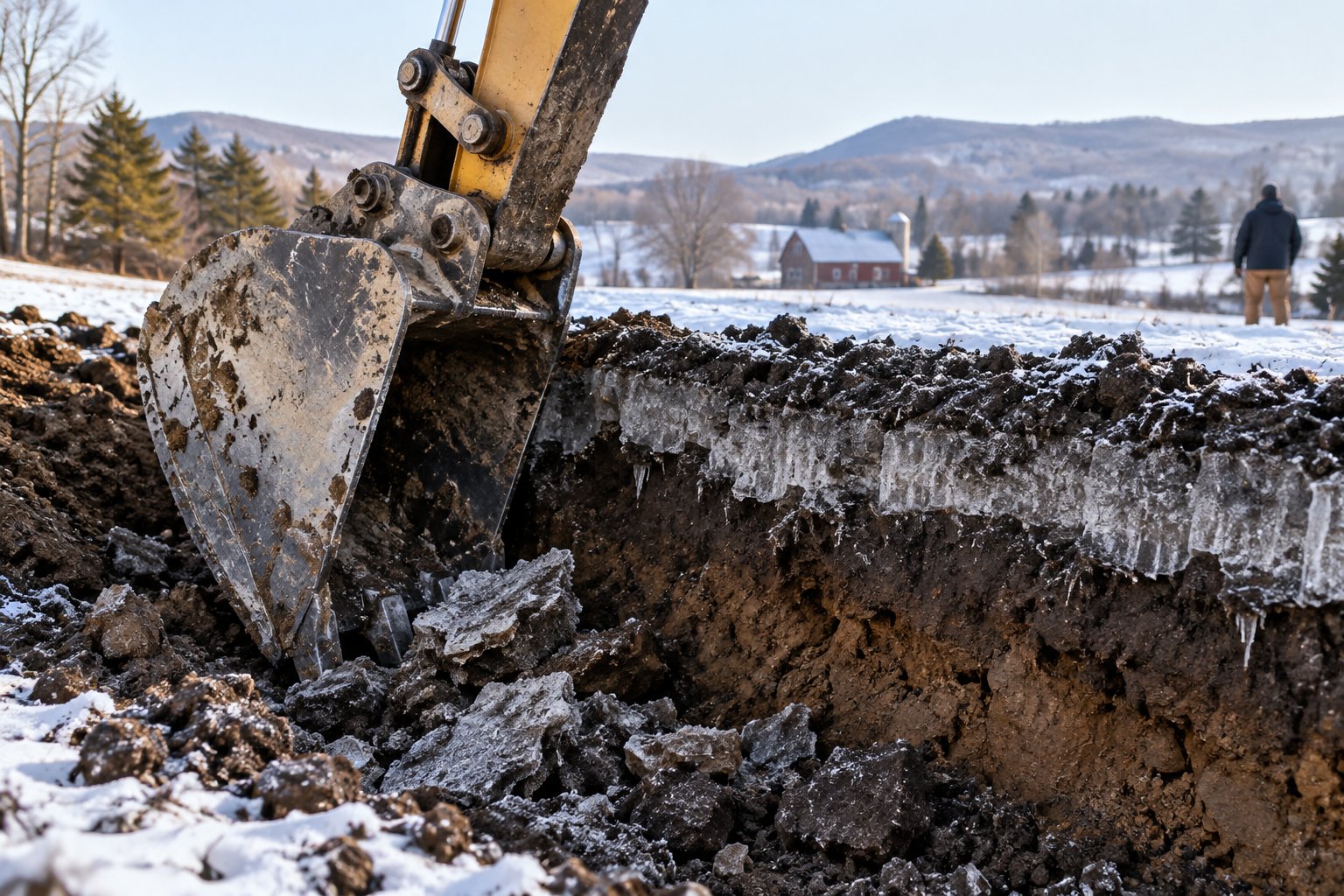
Frost is not just an inconvenience. State stormwater guidance from Minnesota, a state with a similar winter, spells out the problems: frozen ground can cause equipment to slip, can make excavations difficult or impossible with the available equipment, and can freeze stockpiled material so it is hard to compact or spread evenly. Those are exactly the issues that slow down winter sitework around Lake Champlain too.
Vermont's wastewater rules reflect the same reality. When a trench is backfilled, the rules say that frozen material, large clods, debris and organic matter may not be used within 2 feet of the top of the pipe. In plain terms, you cannot simply shove frozen chunks back over a new line and call it done. The material that supports a pipe has to be sound once it thaws.
How deep does the cold go? It depends on the winter, the soil and the snow. Snow acts like a blanket, so a mild, snowy winter freezes the ground less deeply than a cold one with little snow cover, and ground that is packed down by traffic freezes deeper than undisturbed, fluffy snow. The state's sewer service line standard gives a sense of scale: lines are generally buried at least 4 feet deep, and at least 5 feet where the area is plowed or cleared of snow, because frost reaches deeper there.
Work that can still happen in winter
Some jobs do not wait for a thaw, and a good contractor will tell you honestly which ones are realistic on a given day. Here is how it generally breaks down:
- Problem solving on existing lines. A slow drain, a frozen service line or a backup does not care about the calendar. Services such as camera inspection of sewer and drain lines, pipe jetting and pipe thawing are built for exactly these cold-weather problems, and they often avoid digging altogether.
- Targeted repairs. When a camera shows a broken or collapsed section, the repair may need an excavation. Whether that dig can happen right away or has to be staged depends on frost depth, access, and how bad the failure is.
- Drainage and access problems that cannot wait. A culvert that has plugged or a driveway washing out in a January thaw may need attention before spring.
- Planning and paperwork. This is where winter really pays off. Permits, designs, site visits and scheduling do not freeze.
Large projects that involve foundations, new septic systems or extensive grading are usually best scheduled for when the ground can be worked and properly compacted. That is not a rule for every site, so ask for an honest assessment of your specific property rather than a blanket yes or no.
The rules do not take the winter off
A few legal requirements apply whether the ground is frozen or not:
- Dig Safe notice. Vermont law requires premarking the excavation area and notifying Dig Safe at least 72 hours (not counting weekends and legal holidays) before excavating, and the Department of Public Service says that applies to homeowners too. The statute makes an exception for emergencies as defined by the Public Utility Commission.
- Winter construction season for stormwater. Vermont's construction stormwater general permit defines the winter construction period as October 15 through April 15. Projects that disturb an acre or more of land, or that are part of a larger plan that will, need coverage under that permit, and winter work must be covered by a winter construction plan for erosion prevention and sediment control. During this period, disturbed areas that are not yet stabilized must be inspected daily under that permit. Smaller home projects usually fall below that acre threshold, but the principle is the same: bare, frozen soil does not hold up to a thaw.
- Wastewater permits. Vermont requires a state wastewater and potable water supply permit before building a new structure or installing, replacing or modifying a wastewater system. The state defines starting construction to include physical work like excavation or site work. A licensed designer prepares the system design.
Use the cold months to plan your spring project
The smartest thing most property owners can do in winter is get in line early. By the time the frost leaves and the mud dries out, everyone wants the same crews at the same time. A few steps you can take now:
- Walk the property and take photos. Snow cover can hide a lot, so shoot photos in late fall if you can, or note where water pools in spring and where the driveway washes out.
- Mark and record. Know where your septic tank lid, cleanouts, well and buried utilities are located. If you have a drawing from the original installation, find it.
- Sort out permits. If your project needs a town zoning permit or a state wastewater permit, start those applications early, since they do not depend on the weather.
- Request a quote with details. Describe what you want, your timeline and your location. Photos and rough sketches speed things up.
Be careful with DIY winter fixes
When a line freezes or a drain stops working on a cold night, it is tempting to dig it out yourself. Underground utilities, frozen ground and heavy snow make that risky. Before you break ground, even on your own land, the Dig Safe notice requirement applies. If you think a line is frozen or broken, the safest first step is to call a professional to assess it rather than chipping at frozen soil.
Frequently Asked Questions
Can excavation be done in Vermont in the winter?
Sometimes. Frozen ground makes digging slower and harder, and some projects are better saved for spring. Urgent repairs, thawing and inspections often can go ahead. The answer depends on frost depth, snow cover, access and the type of job, so it is worth asking about your specific site.
Do I still need to call Dig Safe in winter?
Yes. Vermont requires premarking and notifying Dig Safe at least 72 hours before digging, excluding weekends and legal holidays, with an exception for emergencies. This applies year round.
Should I wait until spring to ask about a project?
No. Winter is the best time to plan. Permits, design work and scheduling can all move forward while the ground is frozen, which can put you in a better position when the weather turns.
What is the winter construction period in Vermont?
For projects covered by the state's construction stormwater permit, the winter construction period runs from October 15 through April 15, and those projects must follow additional erosion prevention and inspection requirements.
If you are weighing a project for spring or dealing with a cold-weather problem right now, contact us through our contact page to request a quote. Tell us where you are located and what you are seeing, and attach photos if you can. We serve Grand Isle, Franklin and Chittenden Counties in Vermont and Clinton County in New York.


Hours:
Mon - Fri 9:00 am - 5:00 pm
Extended hours by appointment only.



All rights reserved | Privacy policy |
Disclaimer: Septic inspection credit is applied to septic installations only and must be redeemed within 7 days after a written quote provided upon state acceptance of design.
Disclaimer: Septic soil test credit is applied to septic installations only and must be redeemed within 7 days after a written quote provided upon state acceptance of design.